
What Should You Do With a Football Contract Signing-On Fee?
What Should You Do With a Football Contract Signing-On Fee?
What Should You Do With a Football Contract Signing-On Fee?
How to handle a lump sum properly, the difference between spending and investing, and why getting started early matters.
How to handle a lump sum properly, the difference between spending and investing, and why getting started early matters.
How to handle a lump sum properly, the difference between spending and investing, and why getting started early matters.
Wealth Management
Author:
Luther James-Wildin
You’ve just signed. The signing-on fee has landed. And now everyone around you has an opinion.
You’ve just signed. The signing-on fee has landed. And now everyone around you has an opinion.
You’ve just signed. The signing-on fee has landed. And now everyone around you has an opinion.
I’ve seen how this moment plays out for players at every level — and the regret that comes when handled badly.
I’ve seen how this moment plays out for players at every level — and the regret that comes when handled badly.

You’ve just signed. The signing-on fee has landed.
And now everyone around you has an opinion on what you should do with it.
Some of that advice will be good. A lot of it won’t be. And some of it will come from people with a reason to point you in a particular direction.
I’ve been in professional football for over seven years. I’ve seen how this moment plays out for players at every level — and I’ve seen the regret that comes when it’s handled badly. This is what I’d tell any player who’s just received a lump sum and wants to think clearly about what to do with it.
First: Don’t Rush
The worst financial decisions I’ve seen players make were made quickly. The best ones were made after a period of thinking clearly.
You don’t need to do anything with the money the week it arrives. Put it somewhere safe, give yourself 30 days, and use that time to get properly informed. Urgency is almost never your friend when it comes to financial decisions.
The Temptation vs. The Opportunity
I’m not going to tell you not to enjoy your money. That’s not the point. But there’s a difference between spending some of it on things that matter to you, and spending all of it on things that depreciate.
A car loses value the moment it leaves the forecourt. A holiday is a memory. A property generates income every month and builds equity over time. That doesn’t mean you can’t buy the car — it means you should think about the split before you decide.
The players I’ve seen build real financial security during their careers all have one thing in common: they put a meaningful portion of every significant payment into assets that work for them. Not all of it. But enough to build something.
Why Property Works for Footballers Specifically
Your income is high relative to many professions, but it’s also unpredictable. Contracts end. Clubs get relegated. Injuries happen at the worst times. Property gives you a base layer of income and equity that doesn’t depend on any of that.
A single buy-to-let property generating rental income doesn’t care what division you’re playing in. It pays every month. And if you’ve bought well, it’s also growing in value while it pays you.
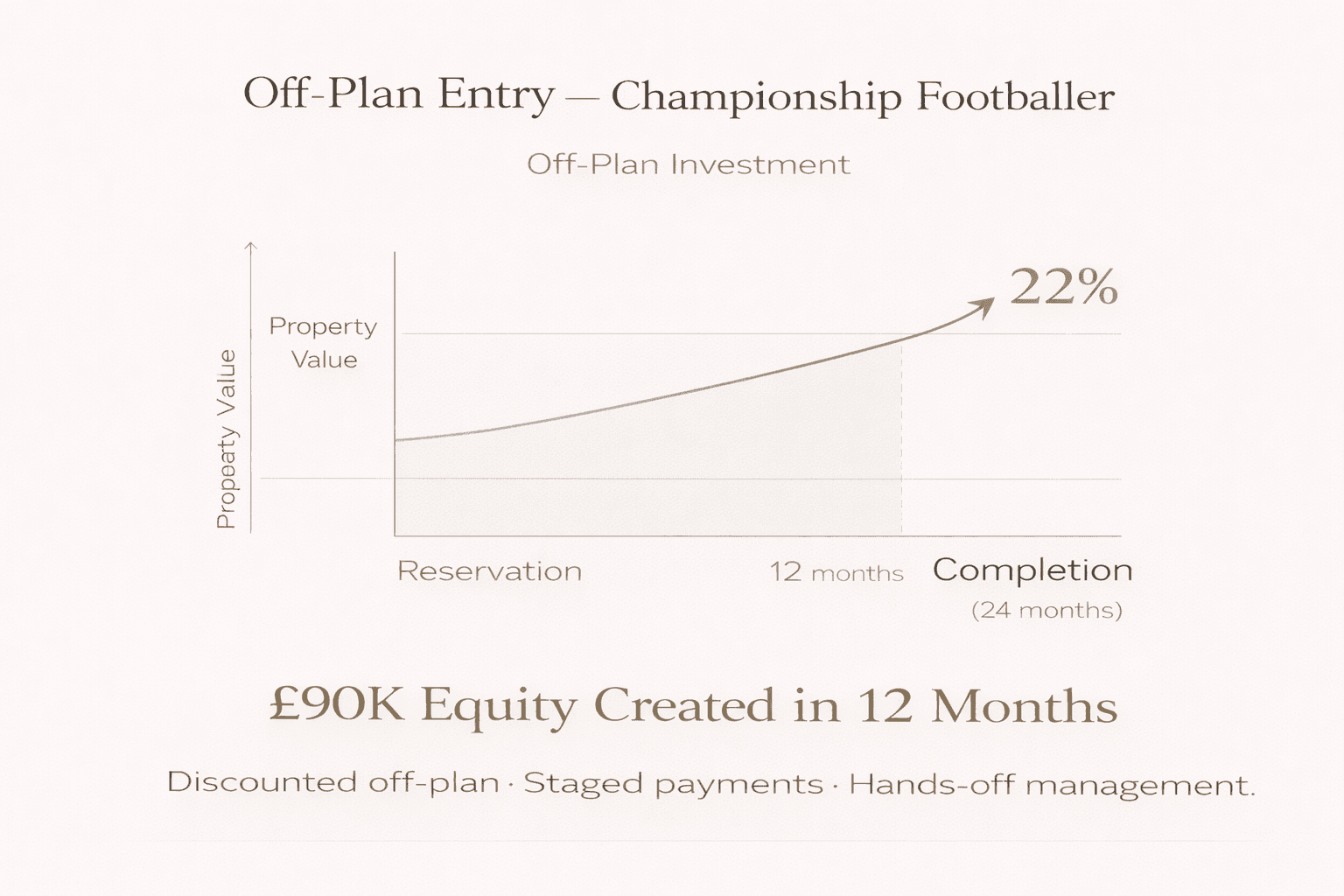
One of our clients used his signing-on fee to secure his first off-plan property in Manchester. He understood the numbers clearly before he committed, the process took less than a month from first conversation to exchange, and the investment is now working for him in the background while he focuses on football.
What to Avoid
• Investing in things you don’t understand because someone made it sound exciting
• Committing large sums to anything with a timeline that doesn’t match your career stage
• Taking financial advice from people who haven’t done it themselves
• Waiting so long to invest that the money gradually disappears on lifestyle spending
What to Do Instead
Start with a short conversation with someone who understands both property and the realities of a footballer’s financial situation. Not a generic financial advisor. Someone who can look at your specific circumstances — career stage, contract length, capital available — and map out what’s actually realistic for you right now.
That’s exactly what our strategy calls are for. No pitch. No pressure. Just clarity on what your options are and what makes sense given where you are.
The Bottom Line
A signing-on fee is an opportunity. Most players get a handful of them across a career. The ones who use those moments well build financial lives that survive the end of their playing days. The ones who don’t often find themselves starting from scratch at 32.
You don’t need to invest all of it. You don’t need to decide immediately. But you do need to think about it seriously — and sooner is better than later.
You’ve just signed. The signing-on fee has landed.
And now everyone around you has an opinion on what you should do with it.
Some of that advice will be good. A lot of it won’t be. And some of it will come from people with a reason to point you in a particular direction.
I’ve been in professional football for over seven years. I’ve seen how this moment plays out for players at every level — and I’ve seen the regret that comes when it’s handled badly. This is what I’d tell any player who’s just received a lump sum and wants to think clearly about what to do with it.
First: Don’t Rush
The worst financial decisions I’ve seen players make were made quickly. The best ones were made after a period of thinking clearly.
You don’t need to do anything with the money the week it arrives. Put it somewhere safe, give yourself 30 days, and use that time to get properly informed. Urgency is almost never your friend when it comes to financial decisions.
The Temptation vs. The Opportunity
I’m not going to tell you not to enjoy your money. That’s not the point. But there’s a difference between spending some of it on things that matter to you, and spending all of it on things that depreciate.
A car loses value the moment it leaves the forecourt. A holiday is a memory. A property generates income every month and builds equity over time. That doesn’t mean you can’t buy the car — it means you should think about the split before you decide.
The players I’ve seen build real financial security during their careers all have one thing in common: they put a meaningful portion of every significant payment into assets that work for them. Not all of it. But enough to build something.
Why Property Works for Footballers Specifically
Your income is high relative to many professions, but it’s also unpredictable. Contracts end. Clubs get relegated. Injuries happen at the worst times. Property gives you a base layer of income and equity that doesn’t depend on any of that.
A single buy-to-let property generating rental income doesn’t care what division you’re playing in. It pays every month. And if you’ve bought well, it’s also growing in value while it pays you.
One of our clients used his signing-on fee to secure his first off-plan property in Manchester. He understood the numbers clearly before he committed, the process took less than a month from first conversation to exchange, and the investment is now working for him in the background while he focuses on football.
What to Avoid
• Investing in things you don’t understand because someone made it sound exciting
• Committing large sums to anything with a timeline that doesn’t match your career stage
• Taking financial advice from people who haven’t done it themselves
• Waiting so long to invest that the money gradually disappears on lifestyle spending
What to Do Instead
Start with a short conversation with someone who understands both property and the realities of a footballer’s financial situation. Not a generic financial advisor. Someone who can look at your specific circumstances — career stage, contract length, capital available — and map out what’s actually realistic for you right now.
That’s exactly what our strategy calls are for. No pitch. No pressure. Just clarity on what your options are and what makes sense given where you are.
The Bottom Line
A signing-on fee is an opportunity. Most players get a handful of them across a career. The ones who use those moments well build financial lives that survive the end of their playing days. The ones who don’t often find themselves starting from scratch at 32.
You don’t need to invest all of it. You don’t need to decide immediately. But you do need to think about it seriously — and sooner is better than later.
More insights
More insights

PPP
Not Sure Where to Start?
Book a private consultation to discuss off-market property opportunities tailored for professional athletes and high-net-worth investors.

PPP
Not Sure Where to Start?
Book a private consultation to discuss off-market property opportunities tailored for professional athletes and high-net-worth investors.
PPP
Not Sure Where to Start?
Book a private consultation to discuss off-market property opportunities tailored for professional athletes and high-net-worth investors.
PPP
Not Sure Where to Start?
Book a private consultation to discuss off-market property opportunities tailored for professional athletes and high-net-worth investors.